Showing posts with label Collin. Show all posts

Tuesday, August 13, 2013

Health Update - New Village Outreach Program!

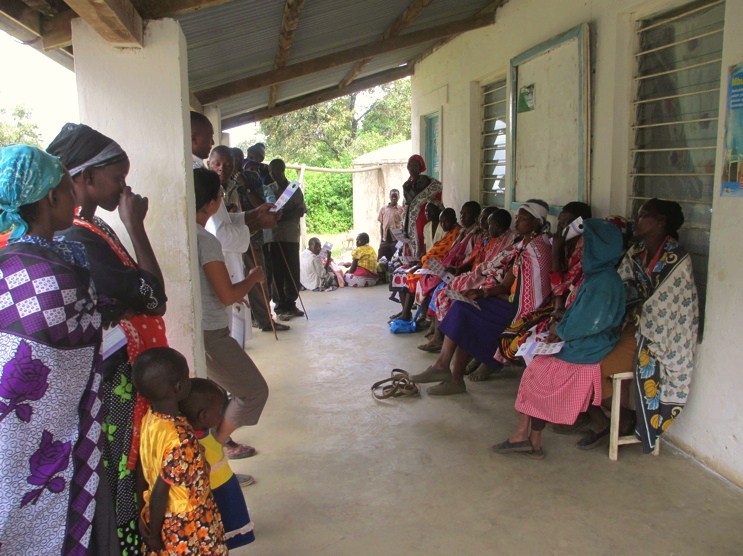
Sam giving a talk on cervical cancer during an Oltiasika outreach.
MWCT's Health Program has stayed busy since we last posted -- lots of exciting work going on all over Kuku Group Ranch!  In the months after the rainy season we've made great progress with our village outreaches, having successful ones each month and starting a new 3-day outreach program in which our nurse Sam and lab technician Felix spend 3 days each month at our 2 primary clinics around Kuku Group Ranch that don't have regular MWCT staffing.

Sam explains a self-breast exam to women in Oltiasika while government nurse Peter demonstrates.
During their 3 days at each clinic they provide cancer screenings for women in the area, family planning sessions, immunizations for children, lab work and testing, and shorter outreaches to smaller surrounding villages with no health facilities at all.  They also give talks to the community on the importance of testing, hygiene, deworming for children, and many other topics.  Finally, they work with the local Community Health Workers to ensure the care provided during the rest of the month is as good as possible.

Sam and Felix with Olorika Community Health Worker Daniel.
We initiated this program in June by sending Sam and Felix to both Olorika and Oltiasika for 3 days each; it was very well received by the communities.  In addition to performing operations and testing, Sam made a point to teach the government nurses how to perform the tasks and they did very well.

Olorika CHW Daniel checking in on the chickens.
In Olorika we also helped with the Community Health Workers' income-generating project, raising chickens.  The money generated by selling the chickens will help purchase small supplies to allow the CHWs to be as useful as possible. Every day we're working to make MWCT more useful to the surrounding Maasai community!

Wednesday, August 7, 2013

Community Ranger News

Time for another Conservation Program update from the Maasai Wilderness Conservation Trust!  This week we'd like to share our pride at some of the recent accomplishments of our Community Rangers team and their recent activities.  It's been a great few months for the Ranger program and we're excited for all the great work they've been doing.

Head Ranger Muterian Ntanin leads his fellow commanders on parade at Manyani.
First a big congratulations to our Head Ranger, Operations Commander Muterian Ntanin.  Muterian recently completed his Company Commanders Training Course at the Kenya Wildlife Services Law Enforcement Academy in Manyani.  It's an honor just to be selected to participate in the training course, but Muterian not only did that but finished #3 in a class of 28 trainees.  The skills and leadership training he received at Manyani are invaluable, and his accomplishments and leadership have already inspired the rest of our Rangers to work hard and continue to improve.

A unit of MWCT Community Rangers standing proud at attention.
Our Rangers have also been increasing their patrol distances and making arrests more frequently, both of which are instrumental in deterring illegal activity around the area.  Our Rangers recently rescued an elephant from poachers and arrested three of them; later in the week they arrested four more poachers for illegally killing animals for sale as bush meat.  These arrested poachers are turned over to the Kenya Wildlife Services authorities, where they will face jail sentences and fine that were recently made much stiffer by the Kenyan parliament.  

The Gordon family from Chicago visited the Trust and brought vital supply donations.
Finally, we want to stress again the importance of MWCT's relationship with tourism partner Campi ya Kanzi to helping our programs grow and succeed.  Recently the Gordon family, tourists on holiday at Campi ya Kanzi, brought with them assorted supplies to donate to our Rangers, including two pairs of binoculars and a camera.  These donations are essential to the program's success; other needed items include GPS units, backpacks, water bottles, and rechargeable batteries.

Wednesday, July 31, 2013

An Inspiring Elephant Story

Hello from the Maasai Wilderness Conservation Trust Headquarters in the bush!  We have a few recent stories about animals on the ranch and MWCT's Conservation Program, including this great news.  In mid-July we had an experience which was incredibly inspiring and heartening, and which showed that the Maasai community has really bought into our conservation efforts.  

Elephants crossing a road on Kuku Group Ranch in front of a Campi ya Kanzi safari car. 
The story begins on a slightly sad note, which is that one of the older wild elephants on the ranch took ill and died.  In one sense this is sad, but on the other hand it means it was able to live a long, full life and die of natural causes - an admirable fate for any large African mammal in these trying times of poaching.  The elephant was noticed by two young Maasai boys herding cattle; they alerted their fathers that an elephant had died.

MWCT's Community Rangers holding the ivory tusks after careful removal.
On receiving this news, the fathers came straight to MWCT Headquarters and notified our Conservation Coordinators of the death.  This was particularly wonderful, as the fathers could just as easily have gone to harvest the ivory and sell it to poachers for a substantial fee.  Upon hearing about the elephant, we dispatched several of our Community Rangers to remove the tusks and give them to Kenya Wildlife Services as required by law, so as to keep the ivory away from poachers and off the black market that has fueled so many elephant kills in recent decades. 

MWCT Assistant Commander Narua gives one of the boys two shukas a reward for his help.
In return for their commendable actions, we held a ceremony at the local school in which we honored the actions of the shepherd boys and their fathers in front of their peers.  One of the boys, a student, received a full new school uniform, and the other received two new shukas to wear around the village and while herding.  Our Head Ranger Muterian also spoke with the other students about how important their tips can be, as most schoolchildren act as herders and roam the bush during weekends and school holidays.

MWCT Head Ranger Muterian speaks to students on the importance of conservation and MWCT.
It was truly a moving occasion to see the Maasai community take such pride in doing the right thing to conserve their natural resources and biodiversity, especially when it would have been so easy to sell the information to poachers.  Events like these show that MWCT is truly making a difference in the lives of the Maasai and making substantial progress in helping locals to view their animals and land as valuable treasures.

Thursday, July 18, 2013

Health Update - Outreaches and Visitors!

It's been a good month for the Health Program, with continued outreaches and education about the aims of our program aimed at helping the Maasai community understand how the Maasai Wilderness Conservation Trust functions and the different services available through our programs.

Lena and Sam prepare to see patients during a recent Health outreach.
We've also been thrilled to host a very important visitor for two weeks -- MWCT Development Coordinator  Kira Seibert was visiting from the United States!  As our lead publicity and development coordinator in America, this visit allowed her to get a much more personal, in-depth understanding of the aims and activities of the Trust.  After three weeks of Health outreaches, safaris, hikes in the Chyulus, meetings with Community Rangers, and much more she didn't even want to leave!

Kira seeing the Conservation Program's work close at hand.
This month in Oltiasika we also practiced some new techniques aimed at maximizing our impact in the short time we have available in each small community.  In addition to the regular seeing of patients by Sam and Felix, Lena spoke with Maasai about the importance of family planning  options and techniques while they were standing in line.  Furthermore, we're developing a plan to expand our Health outreach program by rotating our nurses around to the various dispensaries for a few days at a time, rather than just one or two days per month.  All of these improvements are designed to use MWCT's resources in more effective and efficient ways.

A child is examined during on of MWCT's Health outreaches.

Tuesday, June 4, 2013

Maasai Warrior Ageset Graduation Celebration

In early May MWCT had the great honor of witnessing a truly rare Maasai celebration, one that occurs only once every 15-18 years -- the graduation of a new age set into warriorhood.  The age set is a unique social structure found across East Africa in which Maasai of a similar age are grouped together.  They begin their warrior training together, and this year the most recent generation is graduating into morani.

A warrior carries the beautiful ceremonial horn that provided accompaniment to the singing and dancing.
The cerebration and ceremony last for four days, but we witnessed a special portion near the beginning in which the new warriors leave their previous boma (collection of households) and construct a new boma to live in for the duration of the ceremony.  There is also a ritual ceremony involving four white female cattle and one black male cow, seen in the photo below.

Warriors gather around the ceremonial cattle in the shadow of Kilimanjaro. 
After a short dance at the old boma the entire group walked around two kilometers to the new site, herding the five ceremonial calves and carrying the warrior group's flagpole.  This was followed by much singing and dancing by the warriors, which was quite the amazing spectacle.  The final part of the day's celebration involved starting a fire to signify the commencement of building the new boma.

Health Coordinator Lena Koh with Anne, a Maasai woman who does a lot of translating for the Trust.
In the end it was an amazing day, and one that almost no outsiders have ever been allowed to witness.  It is a testament to the partnership MWCT has built with the Maasai community of Kuku Group Ranch that we were allowed to view and record parts of the ceremony; we are very thankful for this.  Events like these are exactly the type of cultural heritage we're trying to help preserve, and it was gratifying to see it on such beautiful display.

Warriors gather around to start a fire at the new boma site.

Monday, May 27, 2013

MWCT Community Meeting

In late April MWCT hosted a meeting for all of its employees with the purpose of making sure everyone understands the aims and goals of MWCT's programs, how everyone is helping achieve these goals, and how it affects their communities.  Because we have a large number of employees and their individual tasks are often quite dissociated from the work of others in the Trust, we realized a meeting like this would be an excellent reminder of everything the Trust is accomplishing throughout the Maasai community.

All-employee meeting held in an Iltilal Village meeting hall.
Despite intense flooding due to heavy rains more than 50% of MWCT's 230 employees made it to the meeting in Iltilal Village, so it was a great success in that regard.  We began with short presentations on the Conservation, Health, and Education programs, and then opened the floor up for questions and comments.  Finally several community members told stories about how important the Trust was in their lives, and about the need to come together and be supportive of MWCT's activities.

Health outreaches like this one are one of many ways the Maasai benefit from MWCT's work.
The meeting was a great success because it allowed employees to get a true sense of the larger organization they are a part of, and to see the wide variety of ways the Trust is involved in the Maasai community on Kuku.  When our employees realize they are part of a wider group all working to improve the lives of the Maasai, they can travel home and spread this news to the rest of the Maasai.  Because it was such a good success, it was agreed we would hold a similar meeting every spring.

The kids at Kanzi Primary School also appreciate everything MWCT does!

Thursday, May 16, 2013

Health Update - Donated Supplies, Langata, and More

MWCT's Health Program has been continuing its good work of late, with several exciting new developments.  Some of the best news we received recently was the donation of a large number of medical supplies!  Health Coordinator Lena Koh visited Toronto's Sunnybrook Hospital while on holiday and spoke with officials in the biomedical engineering department about MWCT's mission, and they were happy to help in any way they could.

Assorted of donated medical supplies from Sunnybrook Hospital's Biomedical Engineering Department in New York.
Sunnybrook was extremely generous, offering MWCT anything we desired from their surplus and misordered equipment.  Lena brought back a full suitcase of much-needed supplies, including surgical instruments and trays, stethoscopes, resuscitators, scalpels, speculums, nebulizers, wound dressings, hand sanitizer, gloves, and more.  Finally, the hospital offered to continue their aid in the future, and we will be receiving more shipments of these extremely needed items.

Lena discussing a collaboration with MWCT's Health Program with employees at Sunnybrook Hospital.
In other news, our new staff member at the Langata Dispensary has continued to expand the clinic's services since he began working earlier this year.  As a Clinical Officer, Wanyama sees patients with varying complaints, offers vaccines to children from the area, assists with outreaches by MWCT's Health team, and much more.  In only a couple months of work he has already helped the government nurse provide much more care than in past quarters, and we're excited to have him aboard as part of the MWCT team.

Wednesday, May 8, 2013

Support Yoga, Support MWCT!

MWCT is proud to announce a new partnership with a wonderful organization, Moksha Yoga.  Internationally known as the leading North American collective of accessible, socially and ecologically conscious hot yoga studios, Moksha just recently began it's third annual Grow Your Yoga challenge to bring together the global yoga community, celebrate and encourage life and vitality, and raise funds for a worthy cause.


Moksha is doing great things, and the Maasai Wilderness Conservation Trust couldn't be more excited to be the organization they've chosen to donate this year's funds to.  Over the next month Moksha is aiming to raise a total of $100,000 for MWCT while at the same time helping people live a healthier lifestyle - what a great combo!  See Edward talk more about Grow Your Yoga in this great video.


The Grow Your Yoga campaign (known in past years as Living Your Moksha) kicked off May 1st and will continue until May 30th -- it's not too late to get involved!  Just check the page for weekly updates, challenges, chances to win prizes, videos, inspiring stories, and much more.

Wednesday, April 24, 2013

Health Update - Cancer Screenings

MWCT's Health Program recently hired a new Clinical Officer for Langata village named Emmanuel Wanyama, allowing us to greatly expand our services and keep the clinic open on weekends.  Since his arrival clinic visits have increased more than 30%, allowing us to help many more patients.  Thanks to this new flexibility, we recently offered cancer screenings in Langata for the first time to good success.

The district reproductive health officer discusses cancer screenings.
The District Reproductive Health Officer began the day by facilitating a community conservation about women's cancers, after which Sam (MWCT nurse) and Wanyama worked with the Ministry nurse to administer breast and cervical cancer screenings.  During this initial visit ten women were screened with no referrals, and the community was very thankful for this new service.

Women wait for cancer screenings in Kuku village.
Following this we held a second screening two weeks later in Kuku village, this time using our experience to plan more comprehensively for the event.  We brought our ambulance fully outfitted for the day, with supplies including a hospital bed and disinfecting bucket, and set up operations in the local Child Care Fund center.

Sam and the female government explain basic facts about types of cancer.
Because some women are uncomfortable with a male nurse performing the screenings, we arranged for a female government nurse from Loitokitok to accompany us and help for the day.  We again had a community discussion regarding cancers, then screened ten women for breast and cervical cancer, one of whom was referred for further testing.

MWCT ambulance loaded with supplies for our Kuku village screening.

Sunday, April 7, 2013

MWCT's Community Involvement

Often this blog details the dedicated work of MWCT's three main programs in Conservation, Health, and Education, but it is important to remember one of the pillars of everything MWCT does: our involvement with the local Maasai community.  The Maasai of Kuku Group Ranch are the reason we exist, and they make our daily work worth doing.  In the past few months we've been honored to be involved in several important community events, providing excellent opportunities to remember why we do the work we do.

Three members of the Langata women's group display their beaded jewelry.
We've already detailed our adventures at the First Annual Maasai Olympics here, here, and here, and written about a celebration of a young women's group here.  We've also been encouraging the work of a women's group in Langata Village that has been crafting beautiful beaded jewelry.  Formed in 2009 when severe drought killed crops and forced families to search for alternative revenue, the group consists mainly of older women.  Our eco-tourism partner Campi ya Kanzi has graciously offered to help sell this jewelry in their gift shop, supporting the efforts of these local Maasai artists.

Village elders bless young women taking part in an alternative right-of-passage ceremony.
MWCT also collaborated with AMREF to sponsor a three-day workshop in Iltilal Village exploring alternatives to the traditional right-of-passage ceremony for young women, which involves female circumcision.  Over 200 young girls attended the workshop, where the dangers of circumcision were outlined and an alternative ceremony proposed.  On the third day this ceremony was held, with the entire Maasai community participating and the village elders blessing the young women.

Samson leading the community barazaa and explaining the new ambulance.
Finally, MWCT held a barazaa (community meeting) to announce the arrival of an important new part of the Health Program - an ambulance!  Nicknamed Anna (after its donor, Anna Kulidjian), this ambulance greatly expands the reach of our medical capabilities, and will allow for rapid transport of very sick patients, something that was previously impossible.  Samson presented the vehicale to the community and explained how it will be used; to cover costs and instill a sense of community ownership, there will be a small fee for emergency use.  It was well-received, and the Maasai are very happy with this new convenience.

A Community Health Worker examines our new ambulance.

Wednesday, April 3, 2013

Health Update - Community Outreaches and Health Workers

The past months have been exciting ones here at the MWCT Health Program, as we continue our outreaches to all the communities of Kuku Group Ranch.  Recently we've been able to visit Olorika, Kuku, Oltiasika, Dip, and Langata Villages.  Most villages we try to visit once per month, though in Kuku Village we aim for twice per month.

Lena meets with a group of CHWs in Langata Village.
During our outreaches we meet with community members and often provide limited medical services and examinations.  We set up an outpatient clinic and dispense deworming medicine to children, as well as offering antenatal care and immunization clinics.  In November we partnered with Kenya's Ministry of Public Health to immunize over 750 children against the measles, and our trachoma campaign in December reached more than 3,400 Maasai.

Oltiasika CHWs prepare for an outreach by organizing supplies.
Each region's Community Health Workers (CHWs) are an invaluable part of our outreaches, working with us before and during the day to ensure a successful event.  Before MWCT's staff arrives, they publicize the outreach throughout their communities, often going door-to-door to spread the news.  They also secure a meeting place, organize supplies, and alert us to any special needs.  At the event itself, they organize attendees, help with evaluations, and arrange for any necessary follow-up actions. 

Steve works with CHWs in Olorika to map bomas in their area using Google Earth.
We've also been using the outreaches to continue our mapping of bomas (household clusters) on Kuku, so that we have a better sense of where people live and how the CHWs can distribute their efforts to best reach  everyone.  The Community Health Workers really enjoy seeing their villages on Google Earth, and are able to quickly group and identify visible bomas.  By having one MWCT staff member work with the CHWs on this mapping while the others conduct the outreach, a single day's work can be extremely productive.  We plan to continue these successful community outreaches throughout the upcoming months, and continue to improve access to healthcare for all the Maasai of Kuku Group Ranch

Our nurse Sam administers immunizations to children in Dip Villlage.

Friday, March 22, 2013

MWCT Report on Lion-Killing Incident

In February a lion was killed in Kuku Group Ranch in reaction to an incident of lion-livestock predation for the first time in more than three years. The lioness killed was named Nosero (Maa for thick cover after the lava field forests that were her favorite hiding places) was well-known to MWCT and Campi ya Kanzi -- in 2007 she was collared for the first time and was since then has been frequently tracked by MWCT Simba Scouts; her movements, behavior and reproduction history were well-known and documented.

The incident in which Nosero was killed was very unfortunate. Early on the morning of February 19th, a party of young morani (Maasai warriors) departed on a traditional lion hunt to kill the lion responsible for killing a lost cow the day before. The hunt was planned at night and sadly MWCT was not alerted in time to respond. Unfortunately, Nosero and her three cubs were found feeding on the cow carcass when the morani arrived; Nosero and two cubs were killed. The other cub was able to escape.

Nosero shown with her radio collar.
Even more unfortunately, one of the Maasai warriors was severely injured during this hunt and tragically passed away before he could be transported to the Iltilal health center. It had been over three years since a lion was killed by Maasai on Kuku and more than thirty since a human life was lost in this community due to a lion hunt.

In weeks prior to the fatal hunt there had been a sharp rise in planned lion hunts, with hunts prompted by nearly every incident of lion-livestock predation. Since the implementation of Wildlife Pays, MWCT's wildlife protection and livestock compensation program, there has been a marked decline of such hunts as the community embraced the reliability of compensation for losses and the increased economic benefit of tourism. However, this year a significant cultural moment within the community, the initiation of a new warrior age set, stressed this happy partnership with new pressures.

MWCT Rangers, Verifying Officers, Simba Scouts, and Kenya Wildlife Services intervened to stop twelve hunts during 2012, but nine hunts were already mounted in under two months of 2013. Several meetings were held with the new Maasai warriors and community elders, but despite these efforts to convince the morani to abandon the hunts, they persevered and killed Nosero before MWCT could be alerted.

MWCT officers speak to morani while halting a lion hunt in late 2012.
Any time we fail to stop the unnecessary killing of even one animal, we are greatly saddened. But it is important to place this isolated event in context. Two years before Wildlife Pays was implemented, in 2005, an average of nine or ten lions were being killed on Kuku Group Ranch per year. Since Wildlife Pays began the number of lions killed has decreased dramatically; with only five killings in seven years. Overall, the human-caused lion mortality rate decreased 92%.

Additionally, 2013 was widely anticipated to be an extremely challenging year due to the cultural significance of a new warrior age set being inducted. Traditionally, this is when many lions are killed throughout the ecosystem by newly minted warriors eager to prove their manhood through a traditional hunt. In February Prior to the incident on Feb. 19th in which Nosero was killed, MWCT and KWS prevented six lion hunts; two more were stopped in January. From this perspective, the killing of Nosero and her cubs was the only loss in a month that without MWCT's intervention may have seen a dozen lions killed.

MWCT's Simba Scouts received GPS training in late 2012 to become more effective in the field. 
Finally, Nosero herself is testament to the impact of our programs. The lifespan of lions in the wild is between 10-15 years; Nosero reached the age of twelve last year. This is especially significant considering she lived outside a national park in a largely human-dominated landscape. In the course of her long life, this lioness preyed on cattle several times and would have been hunted each time if not for Wildlife Pays.

Over her twelve years she gave birth to five litters with fifteen cubs total, so MWCT's efforts allowed this single lioness to add nine lions (three cubs were killed by fellow lion) to the local population. While saddened by any loss, we consider Nosero's life a shining example of how MWCT's work is assisting the recovery of the Tsavo-Amboseli lion population.

Thursday, March 14, 2013

Maasai Ceremony for Women's Group

In January MWCT had the opportunity to assist with a truly unique celebration that happened in Langata, on Kuku Group Ranch -- a ceremony celebrating the achievements of a local women's group.  Started by a local Maasai woman named Sylvia, the group focuses on a variety of women's issues, including forgoing the traditional Maasai female circumcision and improving literacy and education rates among girls.  Sylvia has been working with the young women of Langata for some time now, and came to MWCT for assistance with a ceremony to celebrate their achievements thus far.

A Maasai woman leads the chorus of mamas singing to their daughters and the other young women in attendance.
Traditionally education has been seen as much more important for Maasai males than for females, and very few girls have continued their educations past primary school.  Instead, they have been circumcised and often marry at young ages, providing their families with a source of income through dowries.  Furthermore, education is not seen as necessary to a girl's life, as they will simply become housewives and mothers.

A very large crowd of Maasai gathered for the celebration, many in bright, traditional Maasai clothing.
Sylvia and her women's group has sought to change this dynamic and improve the position of women in Maasai society, and so far it has been a very successful initiative.  Several of the girls have already entered secondary school, with more slated to do so next year.  Perhaps even more importantly, the Maasai are beginning to see the value of female education, and this new independence is allowing girls to do more with their lives than ever before.

Sylvia (back center) watches as the women's group performs a skit poking fun at the mannerisms of old Maasai men.
The event was a great success, and attended by a large number of the local Maasai.  It was held at a local nursery school on a Saturday, and MWCT helped with organizing the ceremony.  The girls gave speeches and performed a skit, the older Maasai women sang songs, there was a well-reasoned and civil debate about the place of women in Maasai society, and the oldest Maasai elders blessed everyone present.  From the youngest of children to the oldest of elders and everyone in between, it was a unique and exciting experience made possible by the MWCT team, Sylvia, and the efforts of her women's group.

Wednesday, March 6, 2013

Health Update - School Outreaches, Sanitary Pads, and More!

Time for another update on MWCT's Health Program!  It's been a while since we've updated, but it's been a busy and exciting past few months.  We've continued our outreaches to schools all around Kuku Group Ranch, specifically primary schools in Iltilal, Kuku Village, Olorika, Inkisanjani, and Enkusero.  During these outreaches the schoolchildren are gathered together while Lena and Lairumbe give presentations on various health topics.

Lena instructs schoolgirls as to the proper use of sanitary pads.
Often we utilize the Swahili-based TeachAIDS materials on HIV/AIDS prevention, and discuss the effects of puberty, safe sexual practices, proper use of condoms, and more.  We also take the opportunity to dose all students with deworming medicine, protecting them from the harmful long-term effects of worms.  Finally, we discuss the use of cloth sanitary pads for the schoolgirls, and dispense sets of pads so that they can begin using them.

A school full of students closely follows one of MWCT's health presentations.
These cloth sanitary pads are available thanks to MWCT's partnership with a wonderful organization called Huru International.  The pads are sewn by volunteers in the United States to keep costs as low as possible, and then donated to a number of different countries throughout Africa.  MWCT also receives pad donations from another great organization, Pads For Africa.  MWCT asks girls to contribute 200 Kenyan shillings for a year's supply of pads, roughly half the initial cost of the pads.  By charging this small amount for the pads, we give the girls and their families something to invest in, so that they see the value in it.

More than 150 happy schoolgirls pose after receiving their new sanitary pads.
Now instead of staying home to avoid being embarrassed by the effects of puberty, the schoolgirls can confidently stay in school and attend year-round, receiving a better education while also living a healthier lifestyle.  We dispensed a year's supply of pads to more than 200 girls over the past few months, and plan to continue our efforts in the new year - with your help and donations, MWCT's Health Program will be better than ever in 2013.

A group of girls pose with MWCT employees after receiving pads.

Monday, February 18, 2013

Conservation News - Simba Scout Training

The Maasai Wilderness Conservation Trust's Simba Scouts are a special group of eight Maasai warriors paid to patrol Kuku Group Ranch.  As they traverse the Ranch they record animal sightings and locations, especially lion sightings, and they report this data at the end of every month.  This data is extremely useful to the Trust's Conservation program, allowing our staff to develop better population estimates, wildlife movement patterns, and much more.  

The Simba Scouts study MWCT's new wildlife monitoring protocol during our recent training in Iltilal.
When the Simba Scouts were initially employed by MWCT, they were illiterate because they never had an opportunity to attend school.  In fact, without MWCT they would likely have never been able to find a paying job.  In the early stages of the program the Trust provided our Simba Scouts with basic training in writing their names and simple numbers, so that they knew the basics and could aid in data collection.

A Simba Scout demonstrates how to properly identify and count various animals found on Kuku Group Ranch.
A while ago we gave our Simba Scouts further training, building upon their initial data collection skills.  Seeking to further standardize the Simba Scout's data collection, MWCT worked with the Zoological Society of London to develop a new wildlife monitoring protocol.  We proceeded to teach the Simba Scouts this new protocol, as well as giving them training on how to properly use GPS systems on their walks to provide more accurate location data and allow us to make more effective management decisions.

Our Simba Scouts are now better equipped and prepared to go into the field and return with valuable information.
Finally, we provided the Simba Scouts with user-friendly wildlife data recording sheets, showing pictures of each animal so they are able to collection information on animal population and distribution using the most scientific and relevant methods.  Teaching the Simba Scouts GPS operation and systematic data collection was quite the challenge, but the training went very well and was a huge success - we are proud of our newly empowered employees!