Showing posts with label lion collar. Show all posts

Sunday, August 10, 2014

MWCT Celebrates World Lion Day 2014!


The Maasai Wilderness Conservation Trust joins the rest of the world in celebrating World Lion Day on August 10, 2014! 

As we are all unfortunately aware, the global lion population is decreasing rapidly across the continent of Africa. Throughout Kenya, communities and organization are working incredibly hard to mitigate issues and increase protection of such an iconic species to the country, and its' people. It was made very clear to Campi ya Kanzi and MWCT that their help is continually needed to ensure that lions will be in existence for generations to come!


The Maasai Wilderness Conservation Trust is finding dedicated ways to contribute to a holistic strategy in addressing increasing threats to such a vulnerable and crucial keystone species.

Specific increasing pressures are growing on the lion population, particularly on community owned Maasai land, the case for the lions resident of Kuku Group Ranch in southern Kenya, where MWCT is operating its' efforts. As the human population grows worldwide and in Kenya, lions are threatened by habitat fragmantation from human development; lack of natural prey base on the particular community land due to migrant movements to National Parks; and direct prosecution - such as the traditional ritual of lion hunting in Maasai warrior culture.


MWCT is holistically approaching these above threats through various means. By protecting vital habitats through the creation of conservancies (tourism partner Campi ya Kanzi is located entirely in its' own conservancy), combating issues like poaching with strategic anti-poaching teams and patrols, hiring and positioning wildlife monitors across the Group Ranch (particularly young Maasai moran Simba Scouts acting to keep an eye on the lions), providing environmental education outreaches to communities, as well as pioneering a wildlife compensation program, Wildlife Pays, to combat retaliation of predation on traditional livestock.


MWCT and Campi ya Kanzi are proud to say that these above strategies have continued to incentivize the Kuku Group Ranch community to appreciate wilderness with thriving wildlife as a resource to them. The lion population on the Group Ranch is a very healthy 38! We have collared 5 lions on the Ranch, allowing us to further actively protect and monitor their continued activities.

Saturday, July 26, 2014

Conservation Program Update: Nanumyak Helps to Recover Ivory!

Some really wonderful news from our Conservation team! We had noticed that one of our female collared lions Namunyak had not moved for 2 days, as seen on our GPS map. She had been up in the cloud forest high up in the Chyulu Hills in one position. We were slightly uncomfortable with it and feared that she might been caught in a poachers snare or that something had happened to her.

The beautiful Namunyak (right)

So we arranged an operation one morning last week with the rangers and tracked into the forest to the place we last received a GPS location point from her collar. Once we got to the place we smelled a carcass... and heard a soft growl a couple of metres away in the dense bush. On closer investigation we found it... a carcass of a big elephant! We were so relieved to know that Namunyak was actually doing just fine and that the reason for her t be in one position for two days was because she and her group were feasting on an elephant carcass!

Head Ranger Muterian with the removed tusks

The carcass was about a week old and already partially eaten by the lions so we could not determine the cause of death. It is unlikely that Namunyak and her group killed it. However, the tusks were still intact so we removed them to hand over to Kenya Wildlife Service.


This is just another example that we are very proud of to emphasize how the lion collars assist us in our day to day conservation work!

Wednesday, July 9, 2014

Conservation Program Update - Lion Collaring Update

It was a quiet and crisp morning, end of June as the Simba Scouts headed out on foot at daybreak to track lions. They heard the roaring the night before and were determined to find them. The pressure was on since the previous collaring attempt in April, where we went out for three full nights, and without being successful. This time we had to succeed!

Tracking the lions!
It was not long before the Simba Scouts found fresh tracks of 7 lions! They followed these tracks for a couple of kilometres up to a dense thicket in an area known as Eluai, just south of Iltilal village. The Simba Scouts decided to look around the thicket to see if there were any lion tracks coming out of the thicket. After searching for a while, and not finding any tracks apart from the ones heading into the thicket, they concluded that the lions must still be inside, resting. Lions often use dense thickets or lava forest patches on Kuku Group Ranch as a refuge during daytime to avoid contact (that may lead to potential conflict) with people and their livestock.
Conservation Coordinators Lana and Dirk work to hang the carcass in the tree
After receiving this information the plan was clear... conduct a calling station that evening in the vicinity of the thicket.
The vet busy preparing for the long night of collaring
At 4 pm, the collaring team headed out to scout the area and to prepare for the nights calling station. As the last rays of the sun disappeared behind Kilimanjaro, we started with the nights operation, starting with the distressed call of a warthog (pig squeal). Soon after, the silhouette of a lioness appeared... followed by another... and another... and another! Until all 7 lions (2 adult females and 5 sub-adult cubs) were there sitting and watching us curiously from behind a bush a couple of metres away! Our hearts started beating with anticipation as we waited for the vet to get into position to dart one of the adult females. A few minutes went by (which felt like hours) and then the call of the vet came over the radio telling us that he cannot get a clear shot on either of the two adult females from his position as they were obstructed by the bush. He did not want to take a chance and miss as this can only scare them off, so he decided to rather wait patiently for them to come closer to where the carcass was hanging in a tree next to his car.

To our disappointment, the lions lost interest and moved away! However, they stayed in the vicinity. We watched them through the night vision equipment playing and grooming one another. After some time we changed the sound to that of a buffalo calf in distress. This triggered again the interest of the lions and they made several attempts to approach us. After about 2 hours, one of the lionesses stood up and came directly to where the carcass was! It was perfect, and right next to the car of the vet!

Working to fix the collar and take measurements of the newly collared lion!
We are very delighted to introduce to you our newest member of the Kuku lion family - Neluai! Named after the area Eluai where she was collared! She is approximately 5 years old and in excellent condition. She has, since the collaring, visited our waterhole at CCRC several times and has been seen frequently with her group. Recently she has been spotted alone at our waterhole with a big male lion. We suspect Neluai to be mating with him!

Watch this space for more exciting news on our collared lions!

Neluai and a large male visit the water hole at CCRC
She is doing well! 

Wednesday, July 2, 2014

Conservation Program Update - Singila Update

Earlier last month, the school of the Kanzi Academy went on an school outing early morning game drive. An incredibly fortunate game drive brought them to spot 2 lionesses and 4 cubs, with help of their Campi ya Kanzi guide Parashi. 

When they came closer to the lions, they noticed that one lioness was collared and assumed it to be Namunyak. 
A sleepy Singila
Parashi informed the Conservation Team and the Simba Scouts and we went immediately out to the area suspecting it to be a different lion, as Namunyak does not usually come into that area where the lions were reported to be seen. 

We were happy happy to see her healthy and well!
Luckily enough the lions were still around, and after more than 6 months without any good observations the old lioness, Singila appeared with her new companion. The cubs had unfortunately moved into the lava rocks and were no longer visible. 

Singila is the oldest collared female lion on Kuku Group Ranch. She is approximately 11 years old, which is quite extraordinary for a lion on community land. Female lions generally live longer than male lions (as males will often be involved in territorial fights that can be fatal).

She is a well known resident of Kuku Group Ranch; it is quite extraordinary for a female lion to coexist on community land for this length of time. She is quite a well-behaved lion, and it has been wonderful to have had her around for so long.

Singila has successfully raised a few litters during her time on the Group Ranch. She has been collared twice so far, once in 2008, and once in 2011. She is recognizable by her unusual and unique "folded" left ear (seen in the photo below). We were so excited to see her recently, as it has been quite some time! We hope to continue to have more updates about this healthy lioness.

Thursday, May 1, 2014

Why the Lion Collars?

Recently, Namunyak and her group were around the lava fields close to the Iltilal Village. MWCT Conservation Team is well aware of a regular cattle route passing very close to where her location was. The team sent out the Simba Scouts to go inform these regular herders in the area to herd their livestock away from where Namunyak and her group were. 


Our team wanted to ensure that all precautions were taken to avoid Namunyak and the other lions predating on the livestock, as it may lead to conflict with the community, potentially resulting in a lion hunt. The herders were extremely thankful of this warning from our staff. The Simba Scouts also helped the herders to herd the cows away so that they could graze in a different area where it was safe. 

Many may not truly understand the importance of a lion collar. But this story explains one of the main reasons why they are crucially important. There are many many reasons for collaring a lion, but especially in community land where human-lion conflict is high, it is a very useful tool that can be used to protect the lions. With the collars you can track them and also study their behaviour/movement in relation to human settlements. This information can then be used to mitigate conflict and avoid the lions being killed, such as was done above. Once you understand the behaviour and movement of lions in community land, you can identify high risk areas that herdsmen can avoid. 

Saturday, April 26, 2014

Lion Project Update - Namunyak Sighting!

On Thursday April 17, the MWCT Conservation Team had an amazing interaction with Namunyak (collared in December 2013), and her companions. She was seen with two other grown females, and three cubs. 

Namunyak looking very healthy - she has gained a little bit of weight since the collaring!

It was pouring rain, and the lions seemed very relaxed and at ease. They were also yawning quite frequently, so we think they must have had a late night out hunting! Enjoy the photos and a short video below!

The three cubs and one of the adult females

Being quite photogenic! 

Namunyak lounging

Numunyak and a yawning cub


A very sleepy Namunyak! 


Wednesday, April 16, 2014

Conservation Program Update - April Lion Collaring

Earlier last week, the Conservation Program set out on their second lion collaring expedition! The purpose of this exercise was to replace the collars of the 2 male lions collared in early December 2013. Unfortunately, these collars had stopped transmitting the GPS function to track the lions location - so the team received new collars, and scheduled the week to locate these lions using the telemetry capabilities (pictured below) and replace their collars with the properly functioning ones. 

MWCT Simba Scouts using the telemetry tracking device to locate the lions prior to the collaring exercise

The team was out for 3 full nights last week. The first night two big males approached the car, but they were much too far away for the vet to dart them. The second night had four lions approaching the cars (two males and 2 females). They also did not come close to the car! 

On the final night, no lions showed up (only an elephant and a ton of hyenas and jackal), although they did hear some roaring in the distance. 

The positioned car, camouflaged, ready to begin the calling station
So unfortunately, it had been three long days and nights without success. However, we think that the reasoning of this was due to the very bright moon, and the animals did not dare to come close. It was nearly a full moon so it was very bright at night - the lions could not only see the team more clearly, but were aware that the team could also see them due to the light, so they were very cautious in coming closer, despite our calling station and effort to camouflage the cars! 

Working to camouflage the vehicles!
Fortunately, the vet has agreed to come back for another 3 days at the end of May. The moon will not be as bright during this time, so we are incredibly hopeful for positive results as these functioning collars are incredibly crucial for our efforts to protect this incredibly vital lion population in Kuku Group Ranch! 
One of the aspects of tracking lions deep in the wilderness - punctured tires! 

Wednesday, January 15, 2014

Conservation Program Update - Wildlife and Habitat Monitoring

The Conservation Team was hard at work for the month of December. Shared below is a series of updates from our continued various initiatives and efforts.

The Simba Scouts have started regularly monitoring the newly collared lions. The VHF function of all the collars is working well! Furthermore, the Scouts covered large distances on their patrols on Kuku Group Ranch. The minimum walking distance is 150 km per Simba Scout per month.

Map showing the movement of the 3 collared lions in December 2013. Yellow = Namunyak (young female);
Orange = Ormawoi (young male); Green = Lorpolosi (older male). All lions spend more of their time
moving around on Kuku Ground Ranch. Namunyak moved around Mkau area in the Chyulu Hills.
Ormawoi moved around lake Olpakai and spent a lot of time in between Olorika and Olbili.
Lorpolosi moved around Oltiasika, but his collar stopped transmitting data since the 7th of December.
This technical problem is being followed up with the suppliers. 

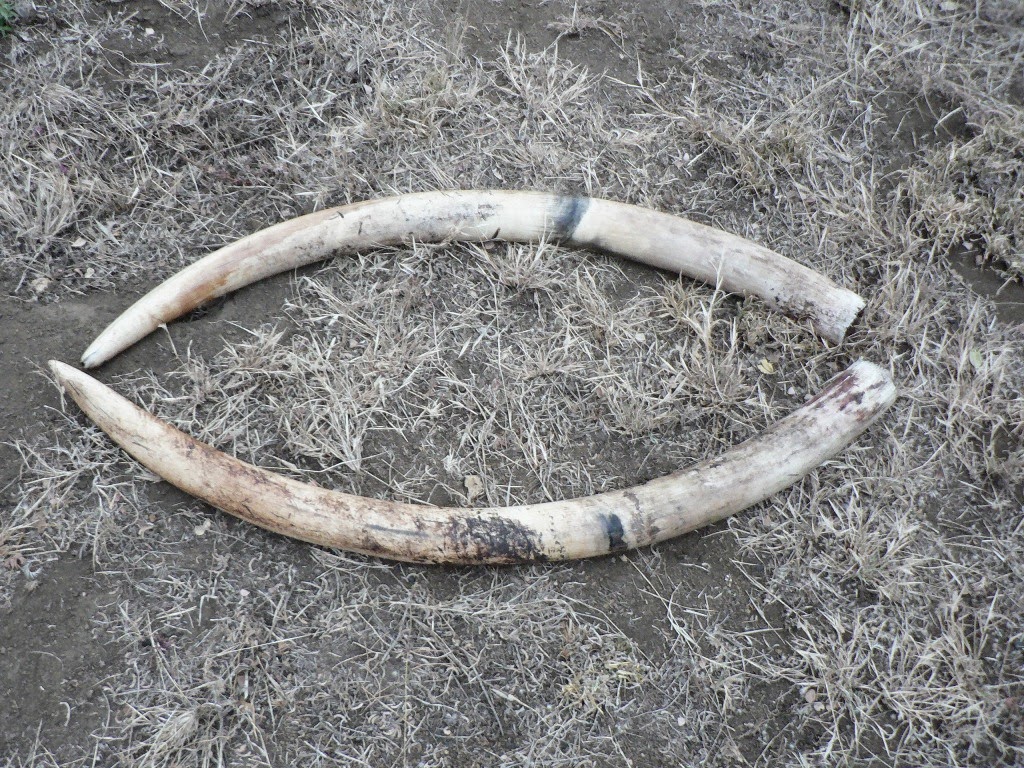
MWCT Rangers found old elephant tusks during a security patrol in Kuku in a dry riverbed. The tusks were heavily degraded and estimated to be more than 5 years old. The tusks were most likely buried by poachers in the past, as there were no signs of an elephant carcass apart from the tusks.

Old elephant tusks that were discovered by MWCT Rangers during a security patrol
MWCT Rangers found a young abandoned zebra while on patrol. The zebra was in healthy condition and so it was decided to leave it in the filed so that it can hopefully reunite with its' family. Survival rates of orphan zebras in captivity are very low, hence the decision to leave it in the wild.

The young abandoned zebra found by MWCT Rangers

Saturday, December 21, 2013

Lion Collaring Expedition - Aftermath

Our conservation team caps off the lion collaring story with one final post.

The next day, Dr. Poghon left MWCT because of other obligations, but we still had one female collar left. The coming week, we will try to set the date for one of two more collaring nights to collar one more lioness.

The collaring operation was quite intense, but we feel that it went very well, and the team is happy and feeling confident to collar one more female within the next few weeks!

The Simba Scouts have already been out tracking "their" new lions with great enthusiasm. It is with high hopes that the new lion collars with be able to accurately assist in the appropriate conservation measures for the lion population of Kuku Group Ranch; understanding their location, habits, and ranges  will contribute to this.
The new Simba Scouts, Songoi, Orkewa, and Joshua tracking the lions from Orkeri Hill

Wednesday, December 18, 2013

Lion Collaring Expedition - Day Four & Five

We've got updates on the next two days of the lion collaring!

Day four arrived and the entire team had good hopes of putting the remaining 3 collars on lions. The new calling station was close to Iltilal, very close to the position the lions were spotted a day earlier - would have been a good central location on the Group Ranch to collar a lion!

Despite the terrible smell of a 2-day old carcass, and hours of playing distress calls of buffalo and warthog, lions were not observed in the area. We thought we had heard lions roaring in the direction of Campi ya Kanzi earlier in the evening. We moved to this area, but this time did not only play distressed calls of buffalo and pig, but also sounds of territorial males as dominant male lions are known to quickly respond to a potential "intruder".

We suddenly heard a big noise and saw a huge black animal running in the dark towards our cars. It appeared to be a very angry buffalo coming to the rescue of the "buffalo calf in distress" call. Although this created some excitement, the lions that we were looking for did not show up. We decided to move onto our next location; but as the rains set in, the expedition was aborted once again.

Day five is now upon us! This would be the last day of the collaring as the KWS vet had to leave for another job the next day. Experts told us to plan for 8 days to collar 4 lions, but the idea of not managing to collar more than 1 lion in 5 days frightened the team. We tried everything in our means to find and collar lions, not sleeping before 5 a.m. and awake at 8 a.m., and we gathered all our strength to give it one more push!

Full of hope, and a little bit of despair, we decided on an area between lake Olpakai and Oltiasika. Some of our Simba Scouts managed to find evidence of lion tracks, even as they were largely washed away by the rains. We were sure there must be lions in the area.

After about 3 and a half hours sitting quietly in the care patiently waiting for the lions to show up, we started to whisper about where to go next as the current location seemed not to be so successful. It was decided to play the buffalo calve in distress one more time before we left. The soundtrack is about 7 minutes long, and on the 6th minute we suddenly heard the growl of a lion that has been darted! Instant excitement!

We were extremely relieved that at last a lion showed up! While searching for the lion, the vet told us over the radio that we were to be looking for a female. When we found the sedated lioness, we saw a male lion laying in ambush next to the sedated lioness waiting for us to come out of the car.

We asked the vet to try to also dart this male lion, because even though they were from the same pride, they will have very different behaviour and movement patterns. Males have larger home rangers and will leave females from time to time to go on territorial patrols, while females usually have smaller home rangers and move less. Furthermore, this would increase the safety of the team trying to collar the lioness.

After a wild chase, the KWS vet managed to dart the lion from the car. When this male was darted, we heard a loud roar and asked Dr. Poghon whether there was possible a third lion in the area - but he assured us he darted the lion that made the noise. The sedated lion was taken into the KWS car and later placed next to its sedated companion.

Oldere and Ormaoi
On close inspection, we noticed that the female was quite muscular and appeared to have male "parts". This was one of the famous mane-less males of Tsavo! These two brothers were moving together as a bachelor group. We decided there was no reason to collar both males of such a group as they might stay together for years. The collar was placed on the one with the man, as it is mostly likely dominant over his mane-less brother. The male collar was far too big to fit properly, so we decided to put on a female collar. The two brothers were named Ormaoi (meaning part of a twin in Maa) and Oldere (refers to grey - whitish colour of the lions coat).

After measuring and treating the lions with necessary health boosters, the antidote was given. To our surprise, after just a few minutes, the mane-less male jumped up and ran away in the darkness - - nobody saw that coming!

Then suddenly the silhouette of a big lion with a full mane appeared in the distance. Seconds later the big maned lion attacked the still partly sedated maneless male, while its brother was still asleep in front of out car. We suspected the young brothers to have come into the territory of the big male who was now investigating our calling station. We told the vet to quickly dart the big male before it could seriously injure the partly sedated young mane-less male.

Lorpolosie fast asleep!
Another wild case resulted in the vet also darting the big male! As a car arrived to watch over the other 2 males, another car managed to find the newly darted big male lion; he was considerably bigger than the others and estimated to be 8 years old. He was in the company of a female lion with 3 - 4 7 month old cubs. The lioness quickly ran off with her cubs to take coverage in the nearby lava.

Measuring the canine length of Lorpolosie - 5.5 cm
The decision was made to also collar this big dominant male with the big male collar. After measurements were taken, this big male was moved about 2 kilometres away to ensure that the fighting males would not immediately meet each other after recovery from the sedation. This male was known by the Simba Scouts, and was named Lorpolosie, meaning "boundaries". He has a large territory on Kuku Group Ranch, but also extends onto neighbouring group ranches.

Translocating Lorpolosie 2 km away so the 2 other males would not attack him
We received a report that the maneless male came back to have a look its collared brother, as he recovered after 30 minutes and left together into the bush. Keeping a watch on the 2nd collared male lion, the other MWCT vehicle moved onto the second calling station. Unfortunately by this time it was quite late (4:30 a.m.) and we did not manage to call any lions at this last position of the evening.

Conservation Managers (Lana & Dirk) with Simba Scouts and Simba Scout Coordinator 

Wow - what a couple of days it has been!

Sunday, December 15, 2013

Lion Collaring Expedition - Day Three

As you can imagine by this point in the process... slowly the team started to get a little anxious, time was definitely running out. Two days without collaring a lion: the pressure was on with only a few more days left.

We decided to change our strategy so in addition to the sound playbacks, we used bait as well. We obtained two goat carcasses that were killed by lions the previous night in Oltiasika to attract lions, in addition to the call up sounds. More than an hour before dark we arrived at the calling station site close to where we saw the lion the previous night. The stomach of the goat carcass was punctured and the carcass was dragged behind the car in a 100 meter radius around the location of the calling station. After dragging, the carcass was hung high into a tree close by.

Carcass hanging in the tree behind the car of the vet
Even before we started playing the sounds, the first spotted hyena showed and we feared the area would soon be infested with spotted hyenas. Then a pair of jackals started barking in the distance and all the spotted hyenas left the area.

Night fell, and so we started playing the sound of a buffalo calf in distress followed by the pig squeal. After more than 3 hours of calling we started to worry that the lions would not come at all. Then suddenly a large growl of a lion was heard next to the vehicle. Everybody in the team that has collared a lion before knew what that meant... a lion was hit by a dart. A rush of adrenaline and excitement. We got it!

Spotlights were switched on and the cars drove around through the bush in search of the darted lion as it ran off into the long grass and dense bush for safety after being hit by the dart. Fortunately, the KWS team spotted the lion, 150 meters away from the darting site.

The KWS vet drove the car close to the lioness and poked it with the dart gun to ensure it was properly sedated before we got out of the car to start the collaring. Measurements of teeth, paws, nose-tail length, shoulder height was taken. Was had approximately 45 minutes to do the job white MWCT rangers and Simba Scouts were on the lookout for possible other lions in the area that might have come to the rescue.

Collaring team with Namunyak
It was a young lioness of about 3 years old in a healthy condition. She was named Namunyak meaning "lucky one". To further boost her condition Dr. Poghon injected some vitamins and antibiotics, and also treated her for ticks and lion lies. When everybody was finished, the antidote was given. A MWCT car was called to come with new Simba Scouts to monitor the recovery of the lioness to ensure she was not harassed by hyenas or other lions that may wish to take advantage of her vulnerable state.

Taking measurements: nose-tail length of Namunyak
After the collaring of Namunyak, the collaring team proceeded to another location where Simba Scouts had seen 5 lions earlier that day. The team stayed out calling up to 5:00 a.m. but no lions showed up, in which they decided to head back to the camp. At that time we received a message from the Simba Scouts that the newly collared lioness had fully recovered and moved safely into the lava bushland. A good sign, as this habitat is a safe hide-out for lions on Kuku Group Ranch.

Friday, December 13, 2013

Lion Collaring Expedition - Day Two

The Conservation Team shares the next days' events in the lion collaring process!

The lion collaring operation continues onto day two! We decided to still push for the collaring of the lone female lion close to the Campi ya Kanzi airstrip. During the day time, Dr. Poghon collected night vision equipment from the rhino sanctuary in Tsavo West National Park to avoid the use of spotlights that might put off lions and increase our capability to detect lions. We help the first call up close to the airstrip, but now in an area with a few more shrubs to cover the visibility of the two vehicles. We decided to no longer use the sounds of feeding hyenas as it attracts too many spotted hyenas, which may in turn intimidate a lone young lioness to come.

Just before dark, shortly after we started playing the sound of the pig squeal, the lioness suddenly appeared and walked around the cars, but then quickly disappeared again into the bush. Everyone including the vet was caught by surprise as we did not expect the lion to react so quickly. Unfortunately the vet did not manage to dart the lion before it disappeared out of range. The lioness was very cautious and stayed on the periphery for almost two hours sitting and looking at us, but not daring to come close.

In a desperate attempt, the vehicle started and the vet tried to move towards the lioness. Unfortunately the lioness sensed danger and disappeared into the darkness not to return again.

Although a bit disappointed that we did not manage to collar the lioness, our hopes raised as there was a lion in the area attracted by our calling station.

Later that night we spotted three pairs of red eyes along the road on our way to the next call up site, and so decided to do another calling station close to the Campi ya Kanzi lodge. During this calling station, spotted hyenas showed up, and a leopard!

Four hours later we moved to our last location of the night near Longido. After a few hours without seeing any predators and again a lot of rain, we decided to stop.

Surely the next night we would have better luck...

Monday, December 9, 2013

Lion Collaring Expedition - Day One

Continued description of the intricate lion collaring process that occurred just recently. This is what happened on Day 1!

In the morning before the Kenya Wildlife Service (KWS) vet arrived, MWCT rangers discovered zebra carcass close to the Chyulu Conservation and Research Center (CCRC). It was not killed by predators, but died of natural cause and it looked like perfect lion bait. In the late afternoon, when the KWS vet arrived, he inspected the carcass and rejected it, as it might have died from anthrax - a dangerous but common disease among wildlife in Kenya.

On the first night of the collaring operation, we went to the airstrip of Campi ya Kanzi and played sounds of warthogs, buffalos in distress, and feeding hyenas to attract lions within the vicinity. Except for over 10 spotted hyenas and a pair of black-backed jackals, no lions showed up (although we were pretty certain they were in the area as there had been regular sightings by Simba Scouts and Campi ya Kanzi personnel). There can be many reasons for a lion not responding to a calling station. When lions are full after feeding on a carcass, it is likely that they will not respond to a buffalo calf or a warthog in distress. Furthermore, lions can move large distances during one night (more than 15 km) and resting places can be different every day. After 4 hours of calling, we decided to relocate to a new position.

This map indicated the locations of the calling stations.
The yellow circles indicate calling station positions without lion sightings. The pins indicate the positions where fresh lion tracks were found; blue pins vare verified observations by conservation managers; organs pins are Simba Scout lion observations; green pins are community observations; and red pins indicate location of livestock predation incident by lions
The second position was closer to the seasonal river. Again, drooling spotted hyenas came running towards the sound, expecting a nice meal. After 4 hours of calling, there was still no sign of any lions. We decided to try our last location near Longido to attract some of the lions that have visited the waterhole at Campi ya Kanzi the previous week. During this call up, heavy rains set in and after an hour it was decided to call it a day and go back to camp. The rains prevented the sounds from travelling a big distance and the visibility became constrained.

After this first night, we realized that the task to collar lions on Kuku Group Ranch is by no means an easy one...

Stay tuned to the blog for what happened next!

Friday, December 6, 2013

Lion Collaring Expedition - Preparation

As you may have read previously, MWCT planned to collar 4 new lions on Kuku Group Ranch with iridium satellite GPS collars to learn more about lion behaviour on community land and ensure a better protection of lions. These collars allow us to see lion movement on the group ranch in real time and enable the Simba Scouts to check more often on the lion's well-being and diet.

We have compiled the story of this extensive process that took place at the end of November. We are very happy to share day-by-day, the excitement, frustration, failures, and successes of this process with you on the blog!

At the end of October, the new GPS collars were picked up in South Africa. After the collars arrived at MWCT headquarters the appointment for the lion collaring was made as soon as possible with the KWS vet, who would assist us during the collaring operation. The vet was only available from the 25th - 29th of November.

This meant that our team needed to collar the 4 lions in the middle of the rainy season in only 4 days - not an easy task! Other lion researchers said suggested scheduling 8 days to collar the 4 lions on this community group ranch, as these lions are more elusive and difficult to track compared to lions in protected areas such as national parks. We immediately realized the challenge ahead of us was a great one, and began extensive planning to maximize knowledge on the lion presence on the group ranch prior to collaring.

Simba Scouts were hard at work during the preparation for this collaring
In the weeks prior to this process, vast areas were scanned for lion tracks and Maasai herders in the field were asked about lion prescence. Lions on community land such as this are generally very shy and cunning and hide away in lava flows and dense bush during the day - making tracking extremely difficult!

Searching for lion prints is difficult in the rainy season as they frequently get washed away
Prior to the arrival of the vet, we created a clear plan on where to collar the lions. We aimed for 3 lionesses and 1 male. We set up call-up locations (sound playbacks that attracts predators i.e. sound of a buffalo calf in distress, pig squeal, sound of hyenas on a carcass, and the roaring of a territorial male) in 3 locations on the group ranch. These locations were at least 2 kilometres away from seasonal bomas to prevent these luring lions incidentally towards the cattle bomas.

And then the collaring expedition begins.... Stay tuned to the blog for the next story soon!

Monday, November 25, 2013

Lion Collaring Update

A quick update from the Conservation Program team at the Chyulu Conservation and Research Center!

We are getting ready for the lion collaring... the countdown has begun and we are beginning the process this evening!

Simba Scout coordinator looking for lions
We have been tracking lions for the past week and have encountered several wild and wonderful things! A snake, and some gerenuk amongst other things. We heard a lot of roaring last night at CCRC and some of our Simba Scouts found fresh tracks of lions!

Gerenuks reaching for a bite to eat!
Snake slithering through the newly green grass
Fresh lion tracks just the other night
We are pulling together the last few details, and compiling all of our equipment to begin the collaring that will occur over the next four days. Be sure to stay tuned to the blog as we will do our best to send updates on how the collaring went! 

All of the equipment needed for the lion collaring!